

By Marten Ramon Cross, The Diamond Shoppe
The short answer
If you are buying a natural diamond in South Africa for an engagement ring, a trade-up, or something you may insure or hand down — stick with GIA.
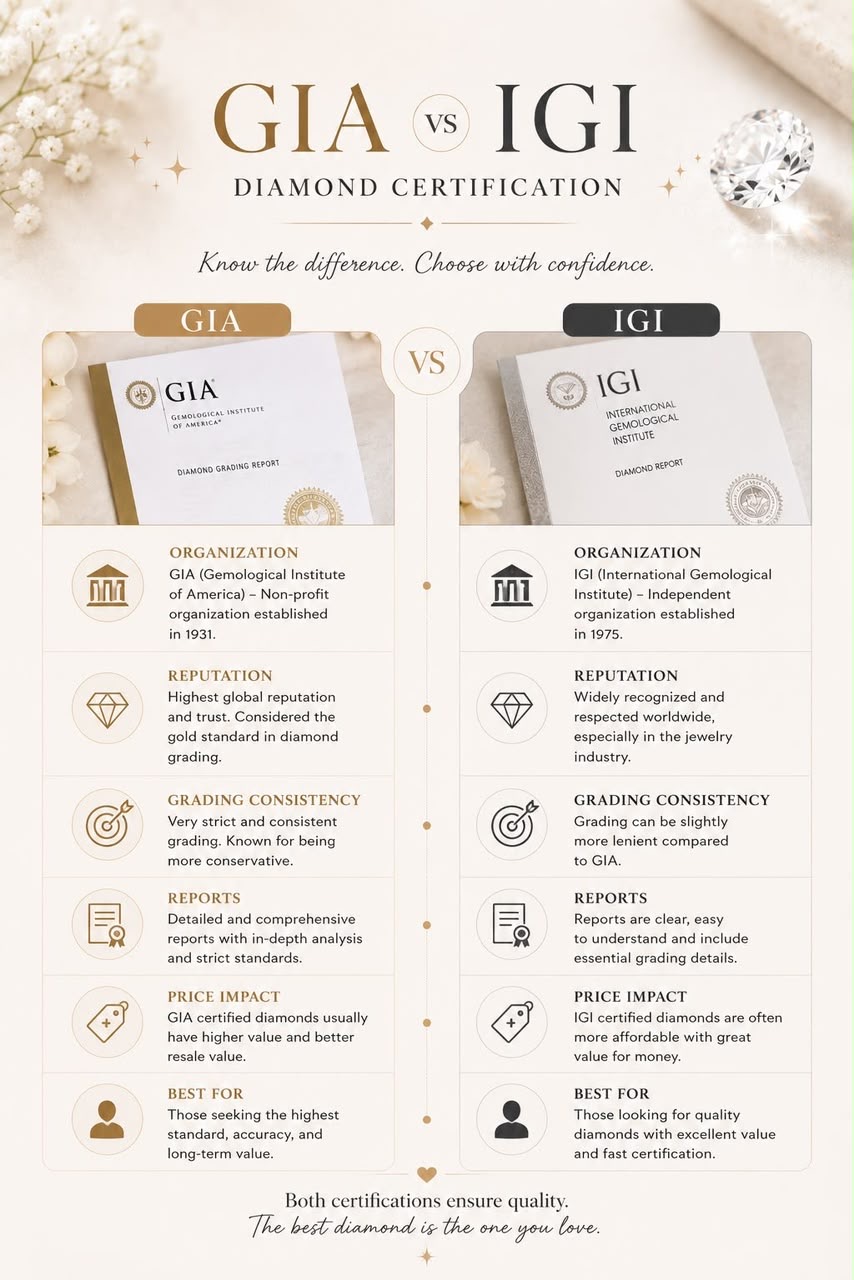
IGI is well known here mainly because most lab-grown diamonds carry IGI certificates. That paperwork is normal when we source lab on request. On natural stones, the local trade still leans GIA. IGI naturals are less common — and when they show up, wholesale usually prices them at a clear discount to GIA.
A certificate grades the stone. It does not grade the deal, the VAT, or the seller’s markup.
Why IGI feels “everywhere” in South Africa now
IGI is far more visible on local counters now because lab-grown scaled globally and IGI became the default lab for that category. Online “same look, lower price” quotes are full of IGI reports.
That familiarity helps for lab-grown. It does not make IGI and GIA interchangeable on a natural engagement stone.
Holding a GIA or IGI report?
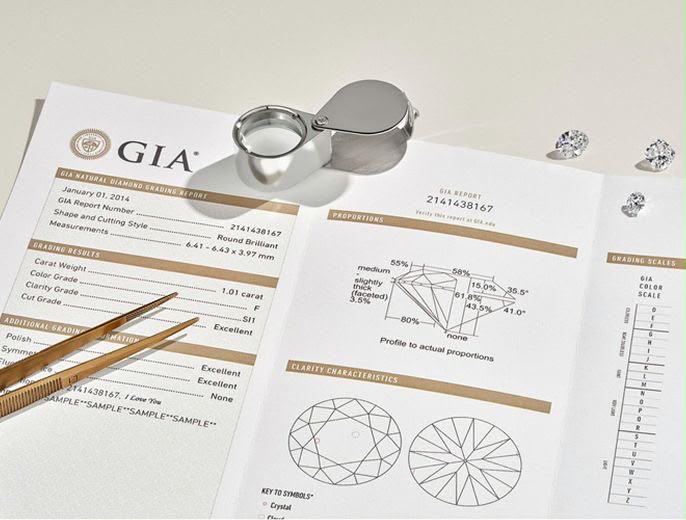
Bring the report number (and the stone if you have it). We’ll loupe-match the girdle inscription in a private appointment.
021 001 3540 · Mon–Fri 09:00–16:00
Lab-grown at The Diamond Shoppe (read this carefully)
We sell lab-grown on request only — we do not stock it. For engagement rings, trade-ups, and heirlooms we lean natural: origin, rarity, and the long game matter when the ring must mean something in twenty years. Lab can work for some statement jewellery where look is the brief.
On buyback we are blunt: lab-grown is valued at zero. If one comes in set jewellery, we weigh the gold and pay for the gold. Certificate brand does not create a resale market for lab. Context: 1 carat lab-grown vs natural
Natural diamonds: GIA first — and where EGL still fits
For natural diamonds in South Africa, GIA remains the reputation standard — what insurers, traders, and many buyers recognise without argument. We prefer it on stones meant to insure, upgrade, or hand down.
IGI on naturals is less popular here than the lab wave suggests.
EGL still shows up on older and mid-range local stock — a cost-friendly alternative on slightly lower-quality naturals: reliable in the SA market, and sometimes stricter than IGI. Not GIA, and not “fake cert” either. Match paperwork to the job and budget.
Internationally: IGI-graded naturals often change hands at roughly 20–30% discounts versus comparable GIA stones, because wholesalers read IGI natural grading as more lenient.
A typical pattern of how “same carat, nicer letters” can mislead:
- A stone that might grade around 1 ct I / SI1 at GIA
- Can sometimes present closer to 1 ct G / VS2 on an IGI report
Side by side, the IGI paper can look like the better stone. It is often not like-for-like — different lab, different scale. Do not pay GIA money for IGI natural paperwork. Love an IGI natural? Buy it with the appropriate discount already baked in.
Side note: what changed on 1 October 2025 (lab-grown only)
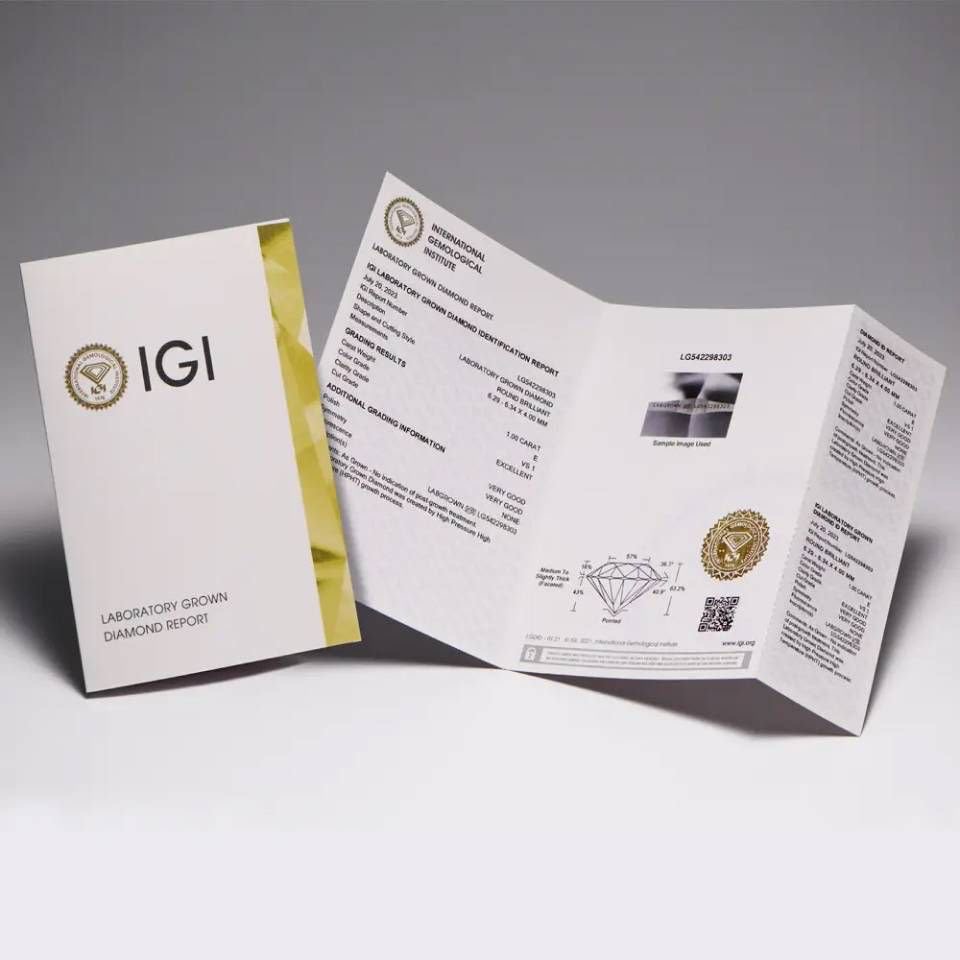
One paperwork detail trips buyers up. From 1 October 2025, GIA stopped putting colour and clarity letters on new lab-grown reports — new assessments use Premium or Standard instead.
When nearly every manufactured stone can top a rarity scale built for naturals, the letters stop meaning much. Older lettered lab GIA reports remain valid — always ask: natural GIA or lab-grown GIA? Invoice must say natural diamond if that is what you bought. IGI still often shows traditional colour/clarity on lab; never confuse “nice letters on IGI lab” with “GIA natural trade value.”
How we use this at the Foreshore showroom
- Report number in writing before any deposit.
- Verify on the lab site on your phone (GIA Report Check / IGI verify).
- Carat, colour, clarity, measurements match the quote.
- Loupe the girdle inscription — same number.
- On IGI naturals: ask how price compares to a true like-for-like GIA stone — not just matching letters.
- Invoice must say natural diamond if that is what you paid for.
More questions? See our IGI vs GIA FAQ (South Africa): verifying reports, EGL, trade-ins, and lab-grown Premium/Standard.
Buyer checklist before you pay
This matters if you are comparing certificates, and it is more recent than most buyers realise.
Since 1 October 2025, the Gemological Institute of America — the laboratory that created the 4Cs and grades the majority of the world’s important natural diamonds — no longer issues colour and clarity grades for lab-grown diamonds. It replaced that service with the GIA Laboratory-Grown Diamond Quality Assessment, which sorts stones into two descriptive categories: “Premium” and “Standard”, with no designation at all for stones that fall below a minimum standard.
GIA’s stated reasoning is that it will no longer use nomenclature created for natural diamonds to describe a manufactured product.
The practical translation: because lab-grown production clusters so heavily at the top of the colour and clarity scales, a grading system built to separate rare stones from common ones stops carrying information. When almost everything is a D VVS1, “D VVS1” tells you nothing worth paying for.
This is GIA’s third grading approach for lab-grown since 2006, and reports issued before the change
remain valid. But if you are weighing a lab-grown against a natural on the strength of a headline grade,
understand that the institution that invented that grade has decided it no longer means the same thing on
a manufactured stone.
Do natural diamonds hold their value?
Better, though nobody should pretend a diamond is an investment.
What I can tell you is what we see. We take natural stones back in constantly — usually as upgrades. Someone buys an 80-point oval engagement ring, comes back four or five years later, and we trade that stone in against something bigger, a better quality, or a different shape because they have changed their mind. There is always a market for it.
The thing that determines how much you get back is what you paid in the first place. If you buy right, you don’t lose anything like as much as you expect. If you bought on the high street, you take quite a hefty knock, because you are carrying the retail markup chain as a loss the moment you walk out of the shop.
The wider market is turning, and it is visible from inside the trade. After three years of depression in natural diamond prices, a lot of mines have closed. Right now there is a serious shortage of bigger, good-quality natural stones, prices for them are phenomenal, and the rough is very difficult to buy even if you want it. It
feels like a turning point.
The published figures agree. The RapNet Diamond Index for 1 carat natural stones rose 0.5% in August 2026, its first increase in fifteen months, with smaller sizes up more (0.30ct up 2.0%, 0.50ct up 2.5%). De Beers’ revenue fell 19% year-on-year in the first half of 2026 and Alrosa’s fell 36%, and both have cut production accordingly.
In fairness to lab-grown: after collapsing 96%, wholesale prices are showing early signs of a floor, with 1 carat rounds actually rising 1% in the second quarter of 2026 — the first positive movement in years. If lab-grown has bottomed, the losses ahead are smaller than the losses behind.
So when is a lab-grown the better buy?
There is a real answer to this, and it isn’t the one a natural-diamond seller is expected to give.
Lab-grown is genuinely good for statement jewellery. If you want something very out there — a big stone, properly blingy, the kind of piece people used to make with semi-precious gemstones — lab-grown is now the obvious material. You can do it in fancy yellows and other colours, and you can do really fun
things with it.
The economics are the whole argument. A piece that would cost you in the region of R1 million in natural stones can be done in lab-grown for something like R50,000 to R100,000, and it will look spectacular. For a piece that exists to be worn and enjoyed rather than held or passed on, that is not a close call.
A natural stone is the better choice when the purchase is meant to hold some value, be insured meaningfully, be traded up later, or be handed down. And when the emotional weight of the object matters — which, for an engagement ring, it usually does.
Where we sit, so you can weigh what you've just read
Yes, we do sell lab-grown diamonds. We don’t stock them, but we bring them in for customers who want them.
We don’t stock them for a reason. The scaling in that industry is unbelievable — we cannot keep up with how quickly prices are coming down, and I am not sure where it stops. My honest view is that lab-grown diamonds will end up used more for industrial purposes than for jewellery. Not right now, but in time.
The Diamond Shoppe has been trading since 1972, when my father started the business. We are second-generation, we source rough locally, we cut and polish it in our own factory in Cape Town, and we sell directly to the customer — which is why our natural pricing sits between R50,000 and R70,000 for a mid- range 1 carat against R100,000-plus at a typical retailer.
We also buy diamonds back. That is the part that gives us a view of what stones are worth after the sale, and not just before it.
Frequently asked questions
How much is a 1 carat lab-grown diamond in South Africa? Between roughly R5,500 and R15,000 at retail, depending on grade and setting. At wholesale, 1 carat lab-grown stones are trading at around US$50 to US$80 per carat as of September 2026. A comparable 1 carat natural diamond costs R50,000 to R70,000 factory-direct, or upwards of R100,000 at a traditional retail jeweller.
What is a lab-grown diamond worth if I sell it back? Nothing. At The Diamond Shoppe we value lab- grown diamonds at zero — if one comes in set in second-hand jewellery, we pay for the weight of the gold and the stone carries no value. We do not buy them, and as far as we are aware no retailer in South Africa is buying them back second-hand.
Do lab-grown diamonds hold their value? No. Resale value is effectively zero, because any second- hand stone competes against new production that keeps getting cheaper — currently around US$50–80 per carat wholesale. Natural diamonds retain considerably more, particularly if you bought factory-direct rather than at retail, though they are not an investment either.
Why are lab-grown diamonds so much cheaper than natural ones? Supply. Lab-grown diamonds can be produced in days to a few weeks in unlimited quantity, while gem-quality natural diamonds are finite.
Wholesale lab-grown prices have fallen 96% since 2018, though retail prices have not fallen nearly as far, with markups holding above 80% over wholesale.
Are lab-grown diamonds real diamonds? Yes. They are chemically, physically and optically identical to mined diamonds. They are not simulants like cubic zirconia or moissanite.
Can you tell a lab-grown from a natural diamond? Not by eye or with a loupe. We use a Yehuda Sherlock Holmes detector, which identifies a synthetic stone in seconds. Certified lab-grown stones are also laser-inscribed on the girdle.
Is GIA still grading lab-grown diamonds on the 4Cs? No. Since 1 October 2025, GIA has replaced colour and clarity grades for lab-grown diamonds with the GIA Laboratory-Grown Diamond Quality Assessment, which sorts them as “Premium” or “Standard” — on the basis that grading language built for natural rarity no longer carries meaning when most lab-grown production sits at the top of the scale.
When does a lab-grown diamond make sense? For statement and costume jewellery, where the point is visual impact rather than lasting value. A piece costing around R1 million in natural stones can be made in lab-grown for roughly R50,000 to R100,000 and will look spectacular. For an engagement ring intended
to hold value, be insured, traded up or handed down, a natural stone is the better choice.
Want a second opinion on a report?
Book a private appointment at the Foreshore showroom.
021 001 3540 · IG: @the__diamond__shoppe